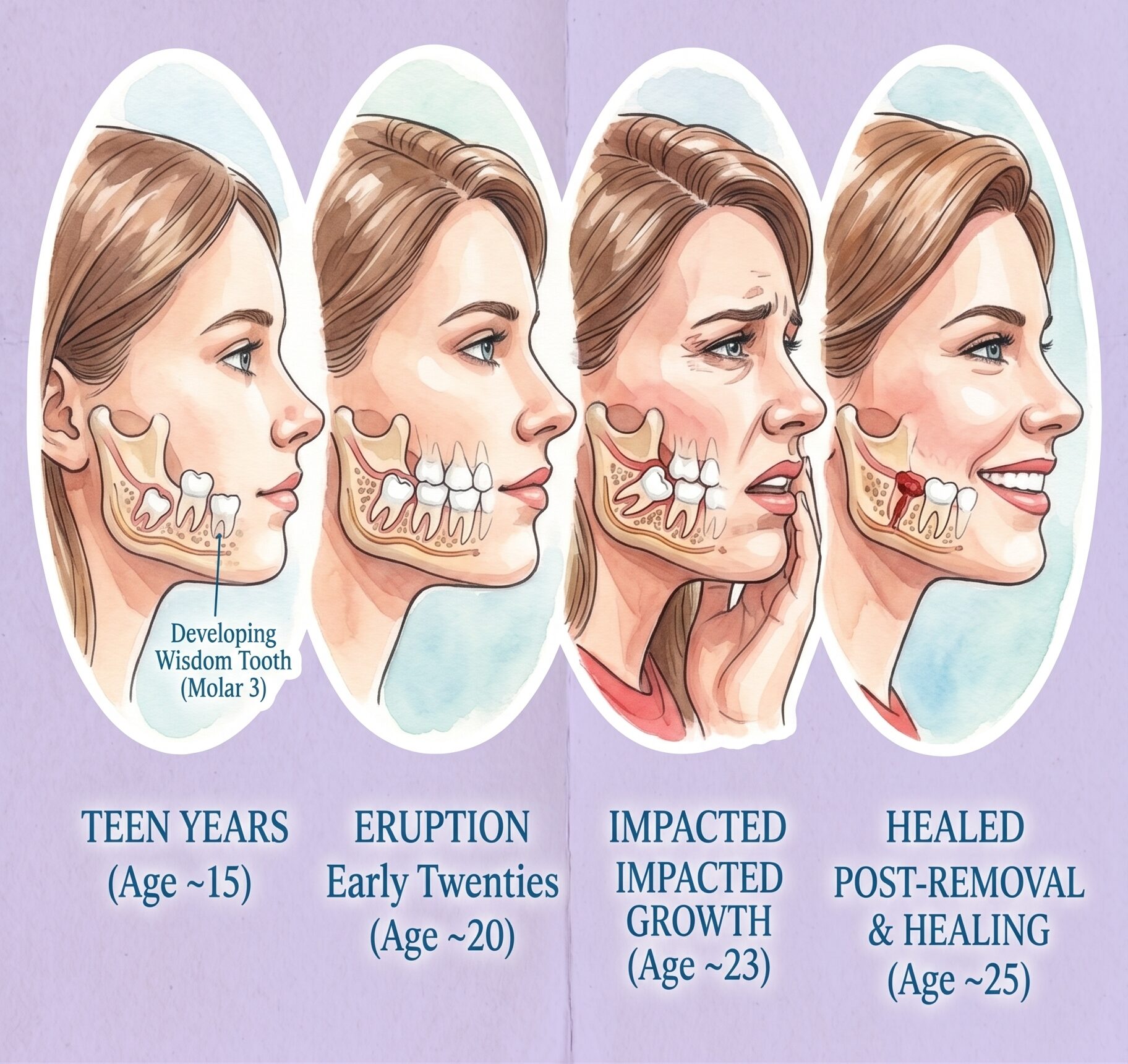

A toothache can start suddenly and quickly become difficult to ignore. Whether it’s a sharp pain when you bite, sensitivity to hot or cold, or a constant throbbing discomfort, tooth pain is often a sign that something isn’t right. While it may be tempting to wait and see if it goes away, many dental issues only worsen over time. Understanding what your toothache could mean—and knowing when to seek professional care—can help prevent more serious problems and get you out of pain faster.
Different Types of Tooth Pain
Sharp pain when biting
This may indicate a cracked tooth, a loose filling, or early stages of tooth decay.
Sensitivity to hot or cold
This can be caused by enamel wear, exposed roots, or cavities. If the pain lingers after the stimulus is removed, it may suggest nerve involvement.
Constant throbbing pain
Ongoing, pulsing pain is often a sign of infection or inflammation inside the tooth, which may require urgent treatment.
Pain with swelling
Swelling in the gums, face, or jaw can indicate an abscess or infection and should be treated as a dental emergency.
While these symptoms can provide clues, it’s not always possible to determine the exact cause without a proper dental examination. If you are experiencing persistent or severe tooth pain, it’s important to have it evaluated as soon as possible.
Home Remedies for Tooth Pain
Rinse with warm salt water
This can help clean the area and reduce mild inflammation.
Take over-the-counter pain relief
Medications like acetaminophen or ibuprofen can help manage pain. Always follow the recommended dosage.
Avoid very hot, cold, or sugary foods
These can trigger or worsen sensitivity and pain.
Keep the area clean
Gently brushing and flossing can help remove any food particles that may be contributing to irritation.
Use a cold compress if there is swelling
Applying a cold pack to the outside of your cheek can help reduce swelling and numb the area.
While these steps may provide short-term relief, a toothache is often a sign of a deeper issue such as decay, infection, or a cracked tooth. If the pain persists or worsens, it’s important to see a dentist as soon as possible for proper diagnosis and treatment.
When to See a Dentist for Tooth Pain
While mild tooth discomfort may come and go, certain symptoms indicate that you should see a dentist as soon as possible. Delaying care can allow the problem to worsen and may lead to more complex treatment.
Pain that lasts more than 1–2 days
Ongoing pain usually means there is an underlying issue that will not resolve on its own.
Severe or worsening pain
Intense pain, especially if it interferes with eating or sleeping, should be evaluated promptly.
Swelling in the gums, face, or jaw
Swelling can be a sign of infection and may require urgent treatment.
Sensitivity that lingers
If pain from hot or cold stays even after the stimulus is removed, it may indicate nerve involvement.
Pain when biting or chewing
This can suggest a cracked tooth, cavity, or infection.
Fever or bad taste in the mouth
These may be signs of an abscess and should be treated as a dental emergency.
If you are experiencing any of these symptoms, it’s important to schedule a dental visit as soon as possible. Early treatment can relieve pain faster and prevent the issue from becoming more serious.
Emergency Toothache Treatment in Markham
If you are dealing with a toothache, getting it checked sooner rather than later can make a significant difference. What may start as mild discomfort can quickly turn into a more serious issue such as an infection, cracked tooth, or advanced decay if left untreated.
At Markham South Dental, I focus on identifying the cause of your tooth pain, and together with my team, we provide the appropriate treatment to relieve discomfort and protect your long-term oral health.